Starting With Matcha: A Beginner's Guide That Won't Waste Your Money
Why Your First Cup Might Disappoint You
If you've tried matcha from a bubble tea chain, a supermarket latte sachet, or a café premix, you haven't really tried matcha. That's not elitism — it's just accurate. The gap between low-quality matcha and proper ceremonial grade is wide enough that they taste like different drinks.
This guide is for people who want to give matcha a genuine first try without spending money on the wrong things or making preparation mistakes that turn people off matcha permanently. New to buying it? See our guide to choosing matcha powder.
What You Actually Need to Start
The minimal setup is smaller than most guides suggest.
Essential:
- Ceremonial grade matcha (start with 30–50g)
- A fine mesh sieve or small tea strainer
- A small bowl or deep cup
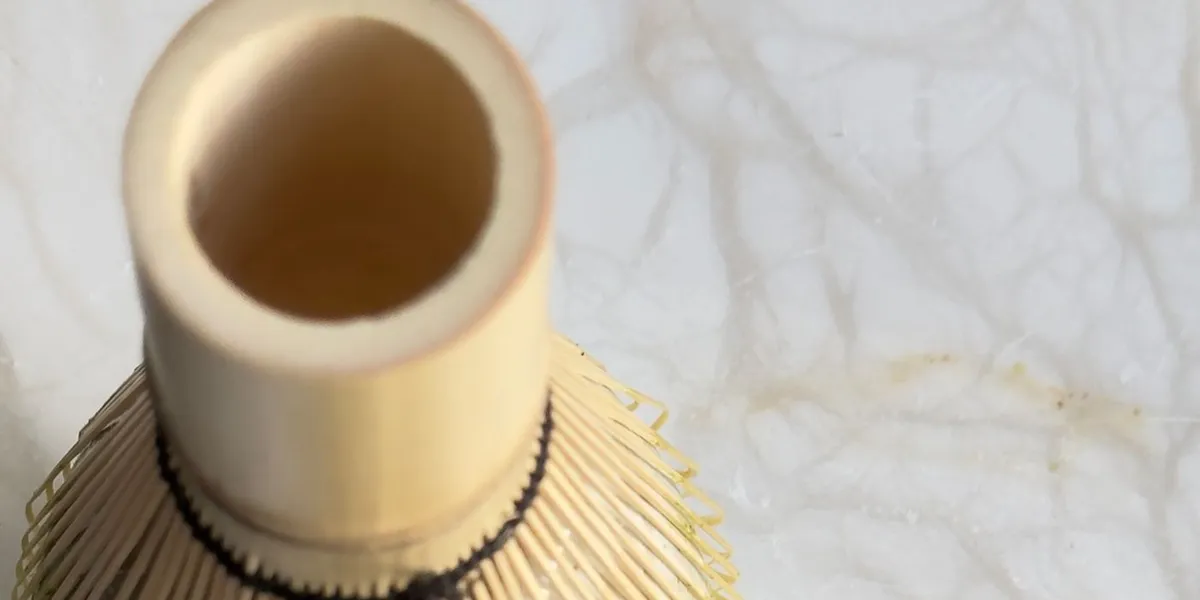
- Something to whisk with — a bamboo chasen is ideal, but a small regular whisk or electric milk frother works for a first try
- A kitchen thermometer, or a kettle and a timer
Not essential for a first try:
- Chawan (traditional matcha bowl)
- Chashaku (bamboo scoop)
- A full ceremonial setup
The bamboo chasen is worth buying if you plan to continue — available on Shopee for RM15–30, and it produces noticeably better froth than any alternative. But don't let missing equipment stop you from starting.
Your First Cup: Step by Step
Step 1 — Temperature. This is the most common mistake. Boiling water (100°C) scorches matcha and makes it bitter. You want 80°C. If you don't have a thermometer: boil your kettle, then wait 4 minutes with the lid open. The temperature drops quickly.
Step 2 — Sift. Put ½–1 teaspoon (1.5–2g) of matcha through your fine mesh sieve into a small bowl or cup. This breaks up the micro-clumps that cause uneven flavour and gritty texture. Skip this and you'll have powdery lumps floating in your cup that never fully dissolve.
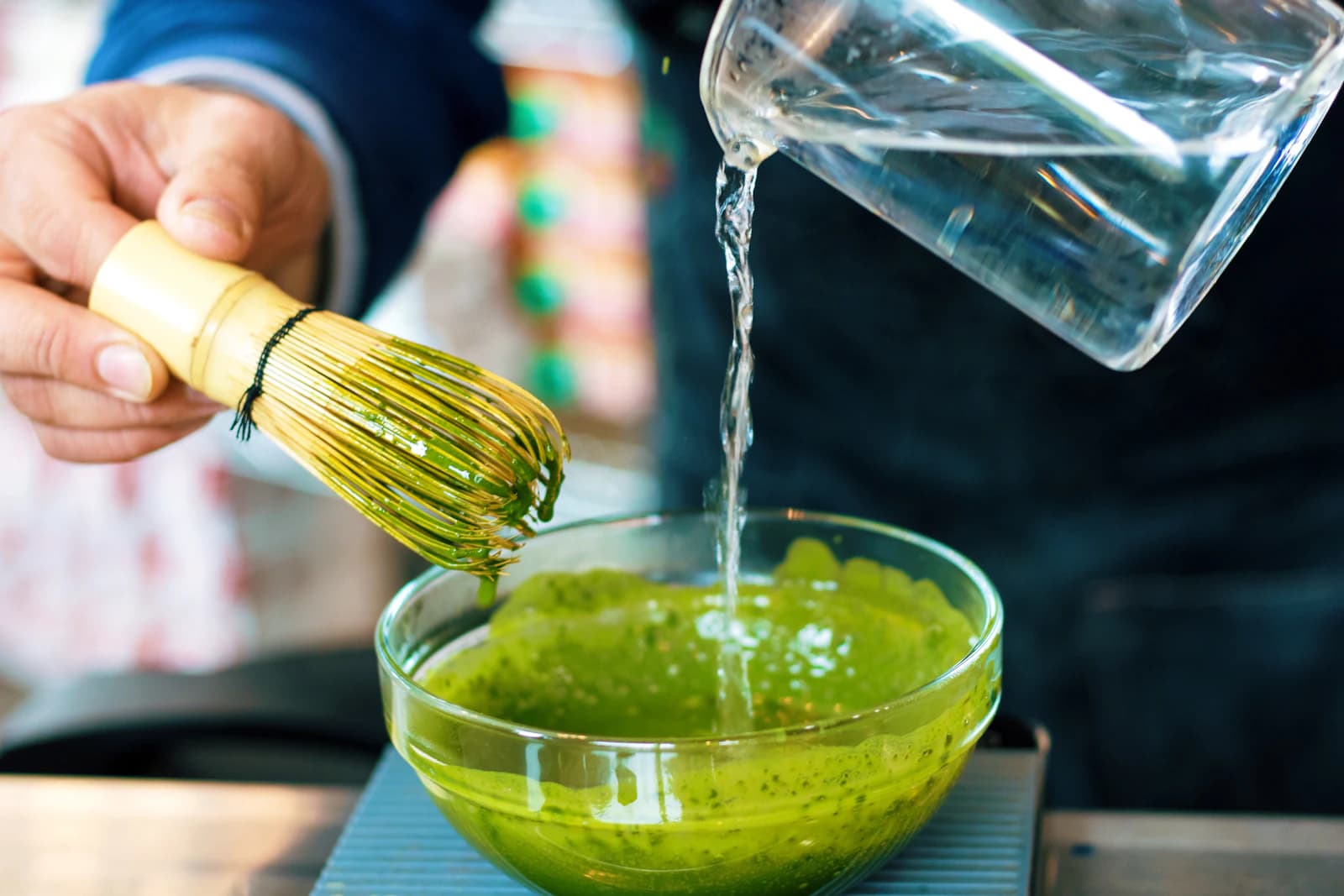
Step 3 — Make a paste. Pour about 30ml (2 tablespoons) of 80°C water over the sifted matcha. Not the full amount — just enough to mix into a smooth concentrate.
Step 4 — Whisk. Using your chasen or small whisk, mix in a rapid "W" or "M" motion — not circular — for about 15 seconds until you have a smooth paste with no visible lumps.
Step 5 — Add the rest of the water. Pour another 50–70ml of 80°C water in. Whisk again for 20 seconds until a layer of fine froth forms on the surface.
Step 6 — Drink immediately. Matcha oxidises quickly. The froth settles within a minute or two and the flavour diminishes. Prepare it, drink it while it's fresh.
This is usucha — thin tea, the standard preparation. Total water: about 80–100ml. Matcha: 1.5–2g.
What It Should Taste Like
Good ceremonial grade matcha is smooth, slightly sweet, and has a rich umami quality — a savoury depth that lingers on the palate. There should be no bitterness and no harshness. The aftertaste is clean and lingering.
If it tastes bitter, one of three things happened: the water was too hot, you used too much powder, or the matcha quality is low. If you've sifted correctly, used 80°C water, and used 1.5–2g — and it still tastes bitter — the matcha is the problem, not your technique.
Building a Taste for It
Matcha is an acquired taste in the sense that it's unfamiliar — not in the sense that it's unpleasant once you understand it. Most people who try it properly either like it immediately or come around within a week of daily cups.
If you find traditional usucha too strong or too earthy at first:
Start with a matcha latte. Use the same two-step method (paste first, then liquid) but substitute 150ml of warm frothed oat milk or dairy milk for the water. Milk rounds out the flavour and adds natural sweetness. Many people who find straight matcha too intense love a well-made matcha latte.
Add a small amount of honey. Dissolve half a teaspoon in your 80°C water before whisking. This complements matcha's umami without masking it.
Reduce the amount. Try 1g in your first few cups — less intense, easier entry point. Increase gradually as your palate adjusts.
Common Beginner Mistakes
Stirring instead of whisking. A spoon stirs liquid in a circle; a chasen aerates and emulsifies. Without proper whisking, you get dense, uneven matcha rather than the light, frothy texture that makes it enjoyable.
Using too much powder. More isn't better. 2g is the standard for an 80ml cup. Using 4–5g produces an overwhelming, astringent drink. If you want stronger matcha flavour, make two cups — don't double the powder in one.
Skipping the sifting. Takes 30 seconds. Makes a significant difference in texture and flavour consistency. Don't skip it.
Drinking it too slowly. Matcha degrades once prepared. Don't make a cup and walk away for 10 minutes. Make it and drink it.
Buying cheap matcha "to see if you like it." This is counterintuitively the most expensive mistake. Cheap matcha tastes bad because it is bad — and you'll conclude you don't like matcha when actually you've never tasted the real thing. Buy a small quantity of genuine ceremonial grade first. If you don't like it after preparing it correctly, then you know.
What to Buy First
30–50g of ceremonial grade matcha from a brand that can tell you where it's from. Not a large quantity — you want it fresh. Opened matcha should ideally be used within 4–6 weeks before it starts to oxidise and lose flavour.
Look for: a named Japanese origin (Uji, Nishio, Shimane), first flush harvest, stone-milling, bright green colour, and airtight packaging.
Ukiyo Kai (開) — RM70, 50g from Uji, Kyoto is what we'd recommend for a first proper matcha experience — balanced, smooth, naturally sweet, with the umami character that makes it easy to enjoy without additives. At 50g, it gives you enough to experiment with preparation and develop your own rhythm. Halal-certified, first-flush, stone-milled.
The Equipment Worth Adding Later
Once you're drinking matcha regularly, these improve the experience:
Bamboo chasen: RM15–30 on Shopee. Produces better froth than any alternative. Rinse with warm water after each use — no soap.
Temperature-controlled kettle: RM80–200. Gets to 80°C instantly rather than requiring timing guesswork. Worth it if you drink matcha daily or make pour-over coffee.
Small handled sieve: More convenient than a tea strainer. RM10–15.
You don't need the traditional bowl, the bamboo scoop, or the ceremony equipment to make excellent matcha. They're a nice addition eventually — but not the starting point.
Ready to taste the difference?
Experience ceremonial grade matcha sourced directly from Japanese tea farms.
Start With Ukiyo Kai — RM70, 50g