How Much Matcha Per Day? The Honest Answer
There Isn't One Right Answer
The honest response to "how much matcha per day" is: it depends on your caffeine sensitivity, what you want from matcha, and what else you're consuming. There's no universal recommended dose, but there's enough research to give you a sensible framework.
The Caffeine Variable
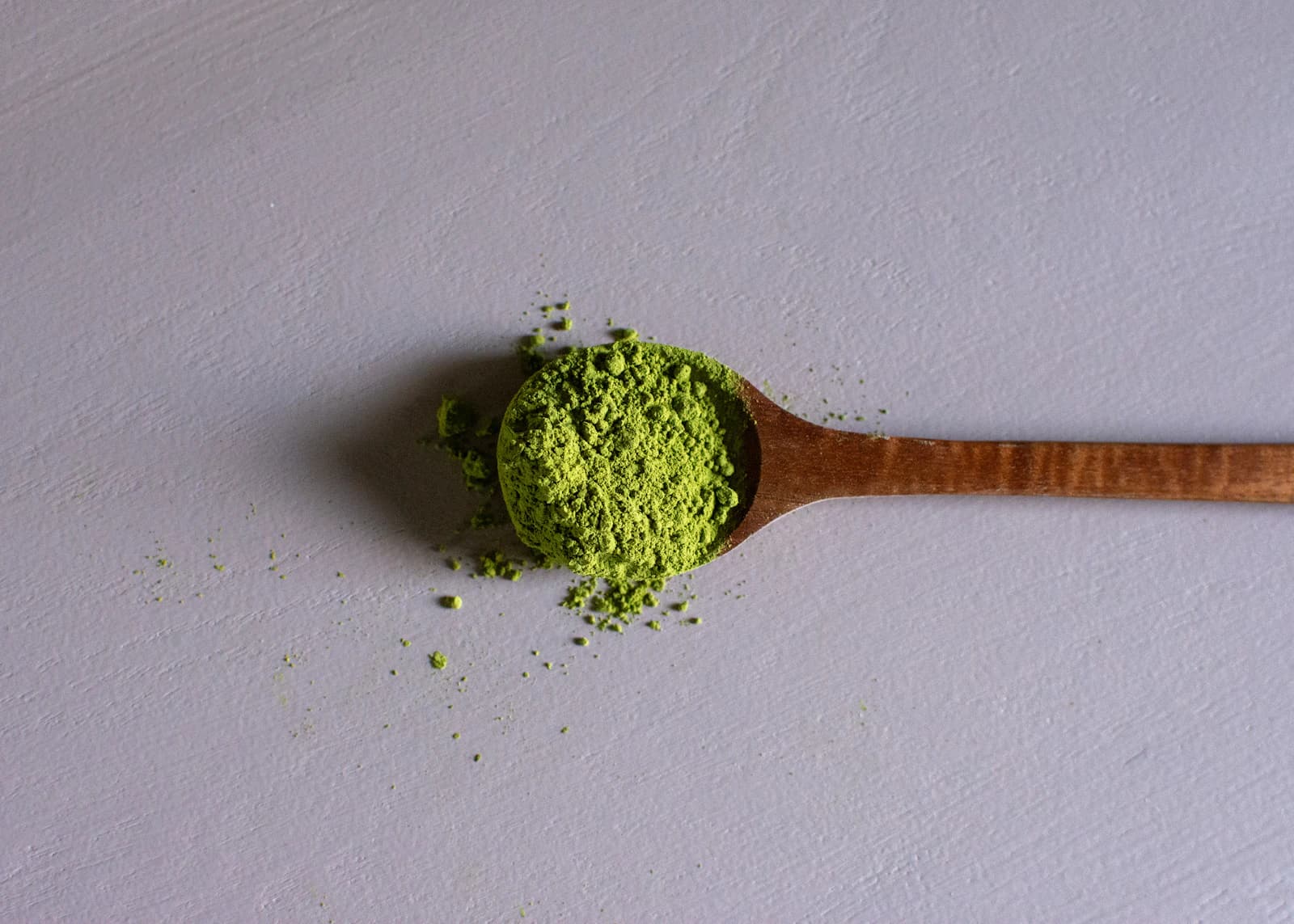
A standard serving of matcha (2g of powder, roughly ¾ teaspoon) contains approximately 60–70mg of caffeine. A larger serving — 3–5g, typical for a matcha latte — contains 90–140mg.
For comparison: a single espresso contains 60–80mg, brewed coffee typically 80–120mg.
Most health authorities — including EFSA and Health Canada — consider 400mg of caffeine daily a safe upper limit for healthy adults. Based on this, 3–5 cups of matcha per day would stay within that limit, assuming you're not combining it with coffee, energy drinks, or other caffeine sources.
But caffeine tolerance varies significantly between individuals. Some people feel jittery at 100mg; others are unaffected at 400mg. Your experience is a more useful guide than any general figure.
The L-Theanine Effect
One reason matcha's caffeine behaves differently from coffee's is L-theanine — an amino acid that modulates how caffeine affects the brain. L-theanine promotes calm focus without sedation and takes the edge off caffeine's more anxious qualities.
This doesn't eliminate caffeine's effects, but it does smooth them considerably. People who are mildly caffeine-sensitive often find they can drink matcha without the jitters they'd get from an equivalent coffee dose.
What "1–3 Cups" Actually Means
Most practitioners and researchers who have commented on matcha dosage converge around 1–3 cups daily as a sensible range for healthy adults:
1 cup (2g): A light daily ritual. Meaningful antioxidant exposure, calm focus, without a significant caffeine load. A good starting point if you're also drinking coffee.
2 cups (4–5g total): The range most regular matcha drinkers land in. Enough to notice the mental clarity effects consistently.
3 cups (6–8g total): Upper range for regular drinkers. Still within safe caffeine limits for most people, but individual sensitivity varies.
Beyond 3 cups, incremental benefit diminishes while the caffeine load becomes more relevant — particularly if you're sensitive or drinking it in the afternoon.
Timing Matters
Matcha's caffeine has a half-life of roughly 5–6 hours. A cup at 3pm means half the caffeine is still active at 8–9pm. If you're drinking more than one cup daily, have the second before early afternoon to protect sleep quality.
Sleep quality has a more significant impact on everything matcha is supposed to help — focus, stress, skin health — than matcha itself. Disrupting it to fit in an extra cup is counterproductive.
Who Should Be More Careful
Pregnant or breastfeeding women: Most health authorities recommend limiting caffeine to 200mg daily during pregnancy. One standard matcha (2g) is roughly a third of that limit. Not automatically off the table, but worth discussing with your doctor.
People with anxiety disorders: Caffeine can worsen anxiety symptoms even when buffered by L-theanine. If anxiety is already a concern, start with very small amounts and monitor carefully.
Those on certain medications: Green tea catechins can interact with blood thinners, certain heart medications, and stimulants. Check with your doctor before establishing a high daily intake if you're on regular medication.
Children: Lower body weight means lower caffeine thresholds. Not recommended as a regular drink for young children.
Practical Guidelines
Start with one cup (2g) daily and assess after a week. If you feel good — clear focus, no jitters, sleep undisturbed — you can add a second cup in the morning or early afternoon.
Don't try to maximise the amount. The point isn't to consume as much matcha as possible — it's to find a quantity that delivers the benefits you want without disrupting sleep or causing caffeine side effects.
For most healthy adults not also drinking significant coffee: 1–2 cups daily is the sensible landing zone. If you tolerate caffeine well and want more, 3 cups is reasonable. Above that, you're unlikely to get proportionally more benefit.
A Note on Serving Size
Most matcha is measured as 1–2 teaspoons (2–4g) per serving. For traditional usucha — whisked with 70–80ml of water — 2g is standard. For a matcha latte using 150ml+ of milk, 3–5g gives better flavour balance because the milk requires more concentration to come through.
At one cup daily, a 50g bag lasts 3–4 weeks. At two cups, roughly 2 weeks. That's the cost baseline when working out your daily habit.
Ukiyo Kai (RM70 / 50g) — first-flush ceremonial grade from Uji, Kyoto. Makes 10–25 cups depending on serving size.
One bowl a day, for about a month
At the 2g serving this article recommends, a 50g tin is roughly 25 bowls — about a month of the daily ritual. Ceremonial grade from Uji, Kyoto.
Shop Ceremonial Matcha